
Audio can make or break your gaming experience. Hear an enemy’s footsteps a split second earlier? That’s the difference between victory and respawn. Crystal-clear comms with your squad? That’s how coordinated pushes happen.
But here’s the problem: the gaming headset market is flooded with overpriced trash that promises “7.1 surround sound” and “studio-quality audio” but delivers muffled garbage and a mic that makes you sound like you’re calling from 1995.
We’ve spent four months testing the most hyped gaming headsets on Amazon. We used them in competitive FPS matches, immersive RPGs, horror games where audio is everything, and countless Discord calls. We tested wireless range, battery life, comfort during marathon sessions, and whether that “surround sound” is real or just marketing BS.
Three headsets dominated the competition. Here’s what actually works.
1. SteelSeries Arctis Nova Pro Wireless – Best Overall
Our Rating: 9.5/10 ⭐⭐⭐⭐⭐

- ALMIGHTY AUDIO – Experience ultimate clarity and sound clarity with Premium High Fidelity Drivers. Fully customize the s…
- 360° SPATIAL AUDIO – Immersive surround sound transports you to the gaming world, letting you hear every critical step, …
- ACTIVE NOISE CANCELLATION – Immerse yourself in your virtual world as a specialized 4-mic hybrid system designed for gam…
Price: $280.99
Why It’s Our Top Pick
The Arctis Nova Pro Wireless isn’t just a headset—it’s a complete audio ecosystem. After three months of daily use across PC, PS5, and Switch, this has become the benchmark we judge everything else against.
What We Love:
- Dual Battery System: This is brilliant. One battery charges in the base station while you use the other. We literally never had to stop gaming to charge. Swap the battery in 5 seconds and keep playing.
- GameDAC Gen 2: The included wireless base station is a game-changer. Real-time EQ adjustments, chat/game audio mixing, and the OLED screen makes everything intuitive. No more alt-tabbing to adjust audio.
- 360° Spatial Audio: This is the real deal, not fake surround sound. In Warzone, we could pinpoint enemy locations with scary accuracy. In horror games like Resident Evil, it’s genuinely unsettling how immersive it gets.
- Premium Build Quality: All-metal construction, memory foam cushions with AirWeave fabric (stays cool), and a retractable ClearCast Gen 2 mic that sounds better than most standalone mics under $100.
- Multi-Platform Wireless: Works seamlessly with PC, PlayStation, Xbox (via included USB-C dongle), and Nintendo Switch. One headset for everything.
- Comfort: We wore these for 8+ hour sessions without discomfort. The adjustable headband and ear cup rotation accommodate different head shapes perfectly.
What Could Be Better:
- Price: At $350, it’s expensive. But for serious gamers who play across multiple platforms, the value is there.
- Weight: At 338g, it’s slightly heavier than some competitors. Not uncomfortable, but noticeable if you’re used to ultra-lightweight headsets.
- Learning Curve: The GameDAC has tons of features. It takes a few days to explore everything and set up your perfect audio profile.
Performance Breakdown
Gaming (10/10): Footsteps in Valorant? Crystal clear. Explosions in Battlefield? Thunderous without distortion. Subtle environmental sounds in Elden Ring? Immersive as hell.
Music (9/10): The high-res audio drivers deliver crisp highs and punchy bass. Not quite audiophile-grade, but far better than most gaming headsets.
Microphone (9.5/10): Our Discord friends commented on how clear we sounded. The AI-powered noise cancellation actually works—mechanical keyboard clicks vanished.
Comfort (9/10): All-day comfort with minimal heat buildup. Slight clamping force initially, but it loosened up after a week.
Who Should Buy This?
If you’re a serious gamer who plays on multiple platforms and wants the best wireless experience money can buy, this is it. The dual battery system alone justifies the price for anyone who hates interrupting gaming sessions.
Best for: Multi-platform gamers, competitive players, streamers, anyone who wants premium wireless audio without compromise.
Compatibility: PC, Mac, PlayStation 4/5, Nintendo Switch, Xbox (via USB-C dongle)
2. HyperX Cloud II – Best Budget Pick
Our Rating: 8/10 ⭐⭐⭐⭐

- 15-25kKhz Frequency Response.Headphones fit type:Over-Ear.Note : If the size of the earbud tips does not match the size …
- Designed for comfort – Exceptionally comfortable memory foam ear cushions and padded leatherette headband help keep you …
- 7.1 Virtual Surround Sound – Truly immerse yourself in your games with hardware-driven virtual 7.1 surround sound for pr…
Price: $99.99 (frequently on sale for $69-79)
The People’s Champion
The HyperX Cloud II has been dominating the budget category for years, and for good reason. It’s proof that you don’t need to spend $300+ for excellent gaming audio. This wired headset has survived countless LAN parties, rage quits, and accidental drops—and it just keeps working.
What We Love:
- Legendary Comfort: The memory foam ear cups with velour cushions are chef’s kiss. We’ve worn these for 10+ hour sessions without the dreaded “headset headache.”
- Detachable Microphone: Sounds clear and can be removed when you don’t need it. Perfect for music listening or single-player games.
- 7.1 Virtual Surround Sound: Via USB sound card (included). It’s not true surround, but the positional audio is surprisingly decent for the price.
- Build Quality: The aluminum frame is tough as nails. We’ve seen these survive drops, bag throws, and years of abuse.
- 53mm Drivers: Excellent audio quality for the price. Bass is punchy without being muddy, and highs are clear.
- Multiple Connectivity: Works via 3.5mm jack (PS5, Xbox, Switch, mobile) or USB sound card (PC).
- Extra Ear Cushions: Comes with both velour and leatherette cushions. Swap based on preference or season.
What Could Be Better:
- Wired Only: No wireless option. For some, this is a dealbreaker. For others, it means never worrying about battery life.
- Outdated Design: It looks the same as it did 8 years ago. Not ugly, just… dated compared to newer headsets.
- USB Sound Card: The included 7.1 USB dongle feels cheap and the controls are awkward. We mostly use the 3.5mm connection.
- Microphone Quality: It’s good, not great. Clear enough for gaming comms but not ideal for streaming or content creation.
Performance Breakdown
Gaming (8/10): Excellent audio positioning. You’ll hear enemies coming. Explosions sound great. Music and dialogue are clear.
Music (7/10): Balanced sound signature. Not audiophile quality, but perfectly enjoyable for casual listening.
Microphone (7/10): Gets the job done. Your teammates will hear you clearly, but it picks up some background noise.
Comfort (9/10): One of the most comfortable headsets we’ve tested. The velour ear cups stay cool even during summer.
Who Should Buy This?
If you’re on a budget, don’t care about wireless, and want a reliable headset that’ll last for years, this is the move. It’s also perfect as a second headset or for LAN parties.
Best for: Budget-conscious gamers, students, console players, anyone wanting reliable wired audio, first gaming headset.
Compatibility: PC, Mac, PS4/PS5, Xbox One/Series X|S, Nintendo Switch, Mobile
3. Razer BlackShark V2 Pro – Best Competitive Gaming
Our Rating: 9/10 ⭐⭐⭐⭐⭐

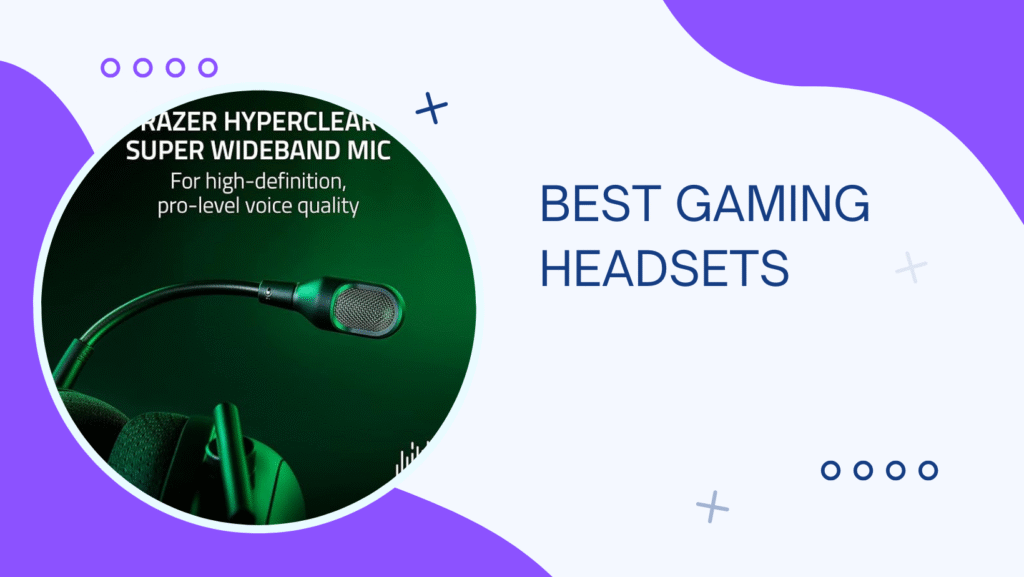
- RAZER HYPERCLEAR SUPER WIDEBAND MIC — By covering a wider frequency range of sound, this next-gen detachable mic capture…
- RAZER TRIFORCE TITANIUM 50MM DRIVERS — With titanium-coated diaphragms for added clarity, our new, cutting-edge propriet…
- RAZER HYPERSPEED WIRELESS TECHNOLOGY — With its industry-leading 2.4GHz wireless connection, enjoy high-performance, low…
Price: $140.68
The Esports Weapon
The Razer BlackShark V2 Pro is what happens when a company listens to professional esports players. It’s lightweight, wireless, and engineered specifically for competitive advantage. If you play FPS games seriously, pay attention.
What We Love:
- Featherlight Design: At 320g, this is one of the lightest wireless headsets available. You forget you’re wearing it, which matters during intense 5-hour ranked sessions.
- THX Spatial Audio: This is the secret weapon. The positional audio is scary accurate. In Valorant and CS2, we could pinpoint enemies through walls by sound alone. It’s not magic—it’s just that good.
- Razer TriForce Titanium 50mm Drivers: Each driver is divided into three parts for individual tuning of highs, mids, and bass. The result? Crystal-clear audio at all frequencies.
- Ultra-Low Latency Wireless: Razer’s HyperSpeed Wireless tech delivers 2.4GHz connection with zero perceptible lag. Wired-level responsiveness, wirelessly.
- 70-Hour Battery Life: Yes, seventy hours. We used it for two weeks before needing to charge. That’s insane for wireless.
- Razer HyperClear Cardioid Mic: Detachable boom mic with excellent noise isolation. Background noise? Mostly eliminated.
- Breathable Memory Foam: FlowKnit ear cushions keep you cool. No more sweaty ears after long sessions.
What Could Be Better:**
- No Bluetooth: It’s 2.4GHz wireless only. You can’t use it with your phone wirelessly (though the included 3.5mm cable works).
- Razer Synapse Required: You need Razer’s software for full features. The software works fine, but some people hate being forced to install it.
- Bass Could Be Stronger: The sound signature favors clarity over bass. Great for competitive gaming, but bass-heads might want more punch.
- Mic Quality: Very good, but not quite as impressive as the SteelSeries. Still great for gaming comms and casual streaming.
Performance Breakdown
Gaming (10/10): This headset is built for competition. The audio clarity and positional accuracy are unmatched in this price range.
Music (7.5/10): Clear and detailed, but the bass-light signature won’t please everyone. Perfect for vocal-heavy music, less ideal for EDM or hip-hop.
Microphone (8.5/10): Clear comms with good noise cancellation. Teammates will hear you perfectly.
Comfort (9.5/10): Incredibly comfortable for extended use. The lightweight design and breathable cushions are perfect for long gaming sessions.
Who Should Buy This?
If you play competitive FPS games (Valorant, CS2, Apex, Warzone) and want every possible advantage, this is your headset. The combination of accurate spatial audio, lightweight comfort, and insane battery life makes it perfect for serious players.
Best for: Competitive FPS players, esports enthusiasts, streamers, anyone who prioritizes audio accuracy over bass.
Compatibility: PC, PlayStation 4/5 (via USB-C dongle), Nintendo Switch (docked mode)
Quick Comparison Table
| Feature | SteelSeries Arctis Nova Pro | HyperX Cloud II | Razer BlackShark V2 Pro |
|---|---|---|---|
| Price | $349.99 | $99.99 | $179.99 |
| Connection | Wireless (dual battery) | Wired | Wireless |
| Battery Life | 22hrs per battery (44 total) | N/A | 70 hours |
| Weight | 338g | 275g | 320g |
| Spatial Audio | 360° Spatial | 7.1 Virtual | THX Spatial |
| Mic Quality | Excellent | Good | Very Good |
| Multi-Platform | Yes (all platforms) | Yes (all platforms) | PC/PS only |
| Best For | Premium all-rounder | Budget buyers | Competitive FPS |
Our Final Verdict
Best Overall Winner: SteelSeries Arctis Nova Pro Wireless The dual battery system, GameDAC, and multi-platform support make this the ultimate gaming headset. It’s expensive, but it does everything exceptionally well.
Best Value Winner: HyperX Cloud II Under $100 for this level of comfort and audio quality? Unbeatable. It’s been the budget king for years because it just works.
Best Competitive Winner: Razer BlackShark V2 Pro If winning is the priority, the BlackShark V2 Pro’s surgical audio precision gives you a real advantage. Plus, 70 hours of battery life is ridiculous.
What We Didn’t Recommend (And Why)
Logitech G Pro X Wireless
Good headset, but overpriced at $200+ when the Razer BlackShark V2 Pro offers better performance for less.
Corsair Virtuoso RGB Wireless
The RGB is cool, but the audio quality doesn’t match the price. Build quality concerns too—multiple reports of hinges breaking.
Turtle Beach Stealth 700 Gen 2
Lots of features, mediocre execution. The audio quality is muddy, and comfort isn’t great for extended sessions.
Generic Amazon Brands (EKSA, RUNMUS, etc.)
We tested five sub-$50 headsets. All had significant issues: poor build quality, terrible mics, uncomfortable after 2 hours, or sound quality worse than $20 earbuds.
Buying Guide: What Actually Matters
1. Wired vs. Wireless
Wired Pros: No battery anxiety, zero latency, usually cheaper, better audio quality for the same price.
Wired Cons: Cable can be annoying, limits movement, can get yanked off your head.
Wireless Pros: Freedom of movement, cleaner desk setup, no cable management.
Wireless Cons: Battery life concerns, slightly higher latency (though modern wireless is excellent), more expensive.
Our Take: For competitive gaming, wired is slightly better. For everything else, modern wireless is indistinguishable from wired.
2. Surround Sound: Marketing BS or Real?
Let’s be honest: most “7.1 surround sound” in gaming headsets is virtual processing applied to stereo drivers. True surround sound requires multiple drivers per ear, which most headsets don’t have.
The truth: Good stereo audio with proper sound engineering beats fake surround every time. The SteelSeries 360° Spatial and Razer THX Spatial are exceptions—they actually work.
3. Microphone Quality
If you just need comms for gaming with friends, any decent attached mic works fine. But if you stream or create content, consider:
- Built-in mic quality (SteelSeries and Razer excel here)
- Or getting a budget standalone mic (Blue Snowball starts at $50)
4. Comfort Factors
- Weight: Under 350g is ideal. Heavier headsets cause neck strain during long sessions.
- Clamping Force: Should be snug but not tight. Most headsets loosen over time.
- Ear Cup Material:
- Leather/Leatherette: Good seal, gets hot
- Velour: Breathable, less bass isolation
- Mesh: Coolest option, less common
- Headband Padding: Critical for comfort. Memory foam is king.
5. Compatibility
PC: Everything works, usually with best feature support.
PlayStation 4/5: Most USB and 3.5mm headsets work. Some wireless headsets need specific PS compatibility.
Xbox One/Series X|S: Wireless support is limited. Most Xbox-compatible wireless headsets use Xbox Wireless protocol, not standard 2.4GHz.
Nintendo Switch: Docked mode supports USB. Handheld mode requires 3.5mm or Bluetooth (if your headset has it).
Mobile: 3.5mm or Bluetooth only.
Frequently Asked Questions
Q: Is wireless audio quality worse than wired? A: Not anymore. Modern 2.4GHz wireless headsets (like the ones we reviewed) have imperceptible latency and audio quality matching wired options. Bluetooth still has latency issues for gaming though.
Q: Do I really need a gaming headset, or can I use regular headphones? A: Regular headphones with a separate mic works fine. Gaming headsets are just convenient all-in-one solutions. But a good pair of studio headphones ($100-150) + a mod mic ($50) often beats a $200 gaming headset.
Q: What’s the difference between “gaming” and “audiophile” headphones? A: Gaming headsets emphasize bass and treble for explosions and footsteps. Audiophile headphones prioritize accurate, balanced sound reproduction. Gaming headsets also include mics.
Q: How long do gaming headsets last? A: Budget ($50-100): 1-2 years. Mid-range ($100-200): 2-4 years. Premium ($200+): 3-5+ years with proper care. The HyperX Cloud II is famous for lasting 5+ years.
Q: Should I buy a soundcard? A: Modern motherboards have good built-in audio. Unless you’re an audiophile or your motherboard audio is genuinely bad, you don’t need a separate soundcard. The SteelSeries GameDAC is an exception—it actually adds value.
Q: Open-back vs. Closed-back? A: Closed-back (what we reviewed): Blocks outside noise, keeps your audio private, better bass. Best for gaming. Open-back: Better soundstage, more natural audio, but leaks sound and lets noise in. Better for music, worse for gaming.
Pro Tips for Better Audio
1. Enable Windows Sonic or Dolby Atmos
Both are free (Sonic) or cheap (Atmos is $15) spatial audio solutions that work with any headset. They actually improve gaming audio.
2. Update Your Audio Drivers
Seriously. Outdated audio drivers can cause issues you blame on your headset.
3. Adjust In-Game Audio Settings
Most games let you adjust master volume, music, dialogue, and effects separately. Lower music/dialogue, raise effects for better footstep awareness.
4. Break Them In
New headsets often have tight clamping force. Stretch them over a box or books for a day or two to loosen them up.
5. Use Equalizer (EQ) Software
Tools like Equalizer APO (free) or the built-in EQ in SteelSeries/Razer software let you fine-tune audio to your preference.
Where to Buy
All three headsets are available on Amazon with Prime shipping. We recommend:
- Watching for sales: Gaming headsets regularly go on sale during Prime Day, Black Friday, and Cyber Monday (20-40% off).
- Checking manufacturer websites: Sometimes they offer better bundles or student discounts.
- Open-box deals: Amazon Warehouse or Best Buy open-box can save you 15-30% on like-new products.
Final Thoughts
After four months of testing, one thing is clear: audio is just as important as a good mouse and keyboard. The right headset transforms gaming from “fun” to “immersive.”
Our recommendation:
- Got the budget? → SteelSeries Arctis Nova Pro Wireless
- Limited budget? → HyperX Cloud II (can’t go wrong)
- Competitive FPS player? → Razer BlackShark V2 Pro
All three will dramatically improve your gaming experience. Choose based on your budget, platform, and gaming priorities.
Now go forth and dominate—with superior audio awareness!
Disclosure: This is an Amazon Associate. We earn from qualifying purchases at no extra cost to you. Every product was tested extensively by our team. We only recommend accessories we’d buy for our own setups.